
Product Details
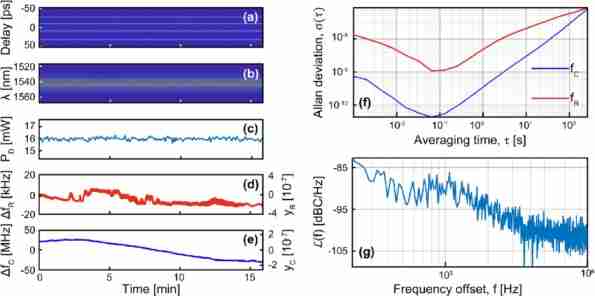
Frequency stability analysis
Sold By :ETC
Delivery duration : * 8 to 10 Days
Quantity:

Buy premium Frequency stability analysis from ZillionsBuyer, your trusted global marketplace for high-quality industrial and commercial products. We supply Frequency stability analysis in Pune, Aurangabad, Jaipur, Nashik, Bengaluru, Coimbatore, Kolkata and Chennai, serving customers across India with reliable quality and competitive prices. Sourced from trusted manufacturers, our Frequency stability analysis is ideal for industrial, commercial, and infrastructure applications. Choose ZillionsBuyer for dependable products, fast delivery, and exceptional customer support tailored to your business needs.
Return Policy:
Thank you for purchasing our products/services. We value your trust and assure you of the best product/services at all times. As our customer, when you are buying our product or service, you agree to our refund policy. Once you have made a purchase on our platform. View details
Why Frequency Stability Analysis Is Necessary
The main objective of frequency stability analysis is to characterize the frequency and phase fluctuations of a frequency source in both the time and frequency domains.
Frequency stability plays a vital role in power system operation and planning, especially with today’s growing energy demands. Maintaining the balance between load and generation is essential to prevent system islanding (splitting into independent sub-networks).
Through frequency stability studies, engineers can evaluate whether a system is stable from a frequency standpoint and determine appropriate thresholds for under-frequency load-shedding protection devices. This analysis is particularly important in isolated or islanded grids, which are more vulnerable to disturbances such as sudden loss of generation or load changes.
What Happens During Frequency Stability Analysis
The IEEE Standard 1139-1999, Definitions of Physical Quantities for Fundamental Frequency and Time Metrology, provides the basis for frequency stability analysis.
Typically, the analysis focuses on a single device rather than a group of devices. It assumes that the device output exists indefinitely before and after the measured data set and that its stochastic properties remain constant over time (stationary and ergodic).
If this assumption proves invalid, the dataset must be divided into smaller segments for accurate results. Deterministic factors such as frequency drift and temperature sensitivity should be removed before noise analysis. Environmental effects should also be minimized under controlled test conditions.
Instrumental errors and reference frequency instability are either corrected or eliminated to ensure accuracy. The challenge in time-domain stability studies lies in producing reliable results over the longest possible averaging periods, balancing test duration and cost.
How Frequency Stability Analysis Is Performed
1. Data Precision
Numerical precision issues are uncommon, but can occur when analyzing highly stable sources with large frequency offsets. In such cases, instability information is hidden within minor deviations from a straight-line frequency trend. To avoid errors, a linear term (frequency offset) or quadratic term (frequency drift) must be subtracted from the raw phase data.
2. Pre-processing
Pre-processing ensures data quality before analysis. This step may involve:
Averaging data
Removing outliers
Eliminating frequency offset and drift
Offsets can be removed by subtracting the mean of first differences, while drifts can be corrected using second differences.
3. Gaps, Jumps, and Outliers
Data gaps or outliers must be identified and explained. Graphical visualization helps detect bad data points. Frequency outliers are identified by comparing each point to the median ± a multiple of the median absolute deviation (MAD). If data are not stationary, the dataset may need to be divided into smaller segments for independent analysis.
4. Gap Handling
Gaps are treated carefully to preserve time intervals. Typically, a value of zero is assigned to represent a gap. Some analysis functions can ignore these points, while others may use interpolation to fill gaps using values just before and after the missing data.
5. Uneven Spacing
For unevenly spaced data, individual time tags are used to convert phase data to frequency data. If spacing differences are small, the average spacing can be used to place data on a uniform grid.
6. Data Analysis with Gaps
Missing points are identified via time tags and replaced with placeholders to maintain consistent spacing. Similarly, outliers may be substituted with gaps. These gaps can span multiple data points.
7. Phase-Frequency Conversion
Converting phase to frequency data is straightforward, even with gaps. However, converting frequency to phase is more complex because integration introduces discontinuities. In such cases, the average frequency value during the gap is used to estimate phase continuity.
8. Drift and Variance Analysis
Drift analysis remains effective when gaps are properly marked. Variance analysis functions can also handle gaps, though performance may vary.
For large gaps, two rules apply:
Use unconverted phase data whenever possible.
Compare results with standard Allan deviation analysis (which is simple and robust with gaps).
In spectral analysis, improper gap-filling can distort the low-frequency components of the spectrum.
9. Outlier Recognition
Outliers are identified using robust statistical techniques such as the median absolute deviation method. Outliers are replaced with gaps, and automated algorithms can iteratively clean the data. However, visual inspection remains crucial to confirm whether outliers arise from measurement errors or the device under test.
Conclusion
Frequency Stability Analysis is essential for maintaining the reliability and safety of modern power systems. It enables engineers to assess the stability of generators and grids, identify potential disturbances, and establish appropriate control and protection measures. By following IEEE standards and employing rigorous data processing methods, ETC ensures precise, reliable, and globally compliant frequency stability studies.