
Product Details
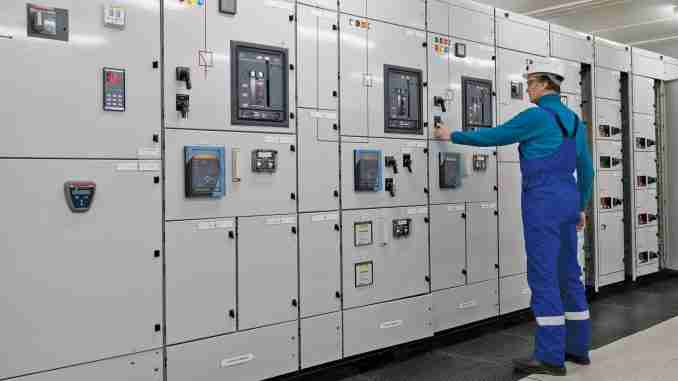
Power quality analysis
Sold By :ETC
Delivery duration : * 8 to 10 Days
Quantity:

Buy premium Power quality analysis from ZillionsBuyer, your trusted global marketplace for high-quality industrial and commercial products. We supply Power quality analysis in Nagpur, Ahmedabad, Nashik, Surat, Jaipur, Mumbai, Kochi and Chennai, serving customers across India with reliable quality and competitive prices. Sourced from trusted manufacturers, our Power quality analysis is ideal for industrial, commercial, and infrastructure applications. Choose ZillionsBuyer for dependable products, fast delivery, and exceptional customer support tailored to your business needs.
Return Policy:
Thank you for purchasing our products/services. We value your trust and assure you of the best product/services at all times. As our customer, when you are buying our product or service, you agree to our refund policy. Once you have made a purchase on our platform. View details
Power Quality Analysis
Electrical systems are critical for smooth operation in industrial, commercial, and institutional facilities. When a system fails to meet its objectives, it becomes essential to inspect it, identify faults, and implement corrective measures. The primary goal of any electrical distribution system is to ensure the proper functioning of connected loads. Poor power quality is often the root cause of equipment malfunction, energy wastage, and operational inefficiencies. Studying and evaluating the electrical system to identify these issues is known as Power Quality Analysis.
Why Power Quality Analysis is Essential
Power quality is a key concern for industrial facilities and presents a significant opportunity for cost savings. Factors such as improper wiring, incorrect grounding, unbalanced loads, or inadequately protected equipment can generate electrical noise, disrupting the system. With the increasing demands on modern electrical systems, monitoring and maintaining power quality has become a standard practice for facilities aiming to ensure reliability and efficiency.
Objectives of Power Quality Analysis
Power quality analysis aims to:
Identify inconsistencies between system supply and load requirements.
Assess the electrical environment to improve modeling or establish a reference standard.
Forecast the performance of equipment and detect potential power quality degradation.
Enhance power factor and overall system efficiency.
Prevent equipment breakdowns and production interruptions.
Reduce energy wastage and associated costs.
Mitigate harmonics, surges, and transients in the electrical network.
Minimize voltage and frequency fluctuations to prevent PLC or system hang-ups.
Avoid transformer overheating, capacitor failures, or unwanted tripping.
Extend the life cycle of electrical components and maximize plant distribution capacity.
Improve production quality by minimizing interruptions.
Key Steps in Power Quality Analysis
1. Identifying Poor Power Quality
Common signs of poor power quality include:
Motor burnout and unexpected downtime.
Memory loss or operational issues in control systems.
Low power factor leading to utility penalties.
Transformer failures and downtime.
These issues can stem from shared infrastructure, harmonic disturbances, improper design, or equipment malfunction. Harmonics and other disturbances can propagate through the network, affecting multiple systems and requiring proper mitigation strategies.
2. Measurements and Data Collection
Power quality is evaluated through site measurements using Power Quality Analysers. Key parameters recorded include:
RMS voltage and current measurements.
Active and reactive power.
Instantaneous power factor.
Harmonic analysis at normal operating conditions.
Voltage improvement and stability studies.
Three-phase balancing assessment.
Surge and transient analysis.
KVA capacity and reactive power evaluation.
Captive power synchronization for utility optimization.
Load flow analysis for voltage levels, power factor, and branch losses.
3. Power Quality Monitoring and Analysis
The process involves:
Establishing survey objectives and referencing the facility’s one-line electrical diagram.
Connecting the analyser at strategic locations, typically near main breakers, to safely measure energy levels.
Capturing data from individual system branches and documenting equipment details using digital photographs.
Monitoring for harmonics through indicators such as transformer or neutral overheating, circuit breaker trips, blown fuses, or unusual noises.
Recording voltage sags, swells, and waveform distortions to assess harmonic severity.
Tracking unbalance caused by single-phase loads cycling on and off.
Monitoring for transient events, often caused by lightning or load switching, to determine system vulnerability.
Benefits of Power Quality Analysis
Performing regular power quality analysis provides several advantages:
Supports predictive and preventive maintenance strategies.
Identifies the source, frequency, and severity of power quality events.
Enables informed maintenance scheduling and corrective action planning.
Tracks trends and monitors system conditions over time.
Analyzes flicker, harmonics, voltage fluctuations, transients, and frequency deviations.
Ensures reliable performance of critical equipment.
Assesses process sensitivity to disturbances.
Evaluates overall system performance against specifications and industry standards.
ETC is an authorized provider of Electrical Installation’s Study, Analysis, Inspection, and Certification services in the UAE, offering comprehensive Power Quality Analysis to enhance system reliability, efficiency, and longevity.