
Product Details
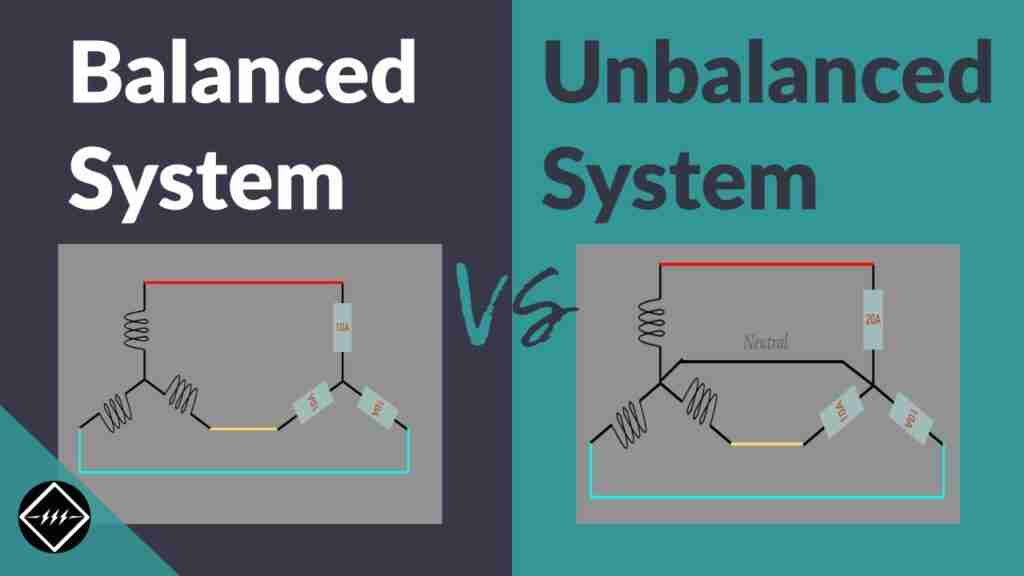
Unbalanced load flow study and analysys
Sold By :ETC
Delivery duration : * 8 to 10 Days
Quantity:

Buy premium Unbalanced load flow study and analysys from ZillionsBuyer, your trusted global marketplace for high-quality industrial and commercial products. We supply Unbalanced load flow study and analysys in Vadodara, Delhi, Hyderabad, Mumbai, Lucknow, Nashik, Ahmedabad and Chennai, serving customers across India with reliable quality and competitive prices. Sourced from trusted manufacturers, our Unbalanced load flow study and analysys is ideal for industrial, commercial, and infrastructure applications. Choose ZillionsBuyer for dependable products, fast delivery, and exceptional customer support tailored to your business needs.
Return Policy:
Thank you for purchasing our products/services. We value your trust and assure you of the best product/services at all times. As our customer, when you are buying our product or service, you agree to our refund policy. Once you have made a purchase on our platform. View details
Unbalanced Load Flow Study and Analysis – UAE and India
ETC is an authorized provider of Electrical Installation Study, Analysis, Inspection, and Certification services in the UAE, offering specialized unbalanced load flow study and analysis services.
Why Load Flow Analysis is Important
Load flow analysis is a critical tool for power system planning and operational studies. It helps engineers optimize electrical systems, especially in distribution automation where repeated load flow solutions are required. As power distribution networks become increasingly complex, load flow studies ensure reliable and efficient system operation.
In many cases, radial distribution systems remain unbalanced due to single-phase, two-phase, and three-phase loads. Standard load flow methods for balanced systems cannot accurately model these scenarios, so specialized three-phase load flow methods are necessary to account for phase shifts, transformer ratios, and un-transposed lines.
Methods for Unbalanced Load Flow Analysis
Symmetrical Component Transformation – Decouples three phases to analyze unbalanced systems.
Fast Decoupled Power Flow – Uses lateral variables instead of bus variables to reduce problem size, suitable for radial networks.
Three-Phase Current Injection Method – Utilizes Newton-Raphson equations in rectangular form for quadratic convergence, employing G-matrices and network topology matrices for precise solutions.
Sequence Component Method – Improves load flow calculations using transformer connections and three-phase algebraic recursive expressions for voltage.
Modeling Transformers in Power Flow Analysis
Transformers significantly influence system performance, affecting:
System losses
Zero-sequence currents
Grounding and protection strategies
Core losses are modeled as shunt functions at each phase of the transformer’s secondary terminal, allowing accurate computation of real and reactive power losses.
Unbalanced Radial Distribution Systems
An unbalanced radial distribution system consists of buses connected by distribution lines, switches, and transformers. Each bus may include loads, shunt capacitors, or co-generators. Unlike ideal assumptions of balanced three-phase currents and transposed lines, real-world distribution systems often contain single-phase loads and irregular conductor configurations, requiring specialized analysis methods.
Types of Loads Considered
Lumped Loads – Single, two, or three-phase loads with delta or wye connections, modeled as constant power loads.
Distributed Loads – Loads supplied through transformers at multiple points along the feeder, modeled as buses to represent each load point efficiently.
Voltage Drop Study and Analysis
What is Voltage Drop?
Voltage drop occurs when the electrical potential decreases as current flows through passive components in a circuit. Excessive voltage drop can cause:
Low voltage at equipment, leading to improper or erratic operation
Reduced efficiency and energy wastage
Overheating at high-resistance connections, which may lead to fire hazards
The National Electrical Code (NEC) recommends a maximum voltage drop of 5% at the farthest point in a branch circuit for optimal efficiency.
How Voltage Drop is Analyzed
Voltage drop can be analyzed using:
Manual Methods
Ohm’s Law (Single-Phase Circuits)
- VD=I×RVD = I \times RVD=I×R
Where VD is voltage drop, I is current, and R is conductor resistance.
Formula Method
Single Phase:
- VD=2⋅K⋅Q⋅I⋅DCMVD = \frac{2 \cdot K \cdot Q \cdot I \cdot D}{CM}VD=CM2⋅K⋅Q⋅I⋅D
Three Phase:
- VD=1.732⋅K⋅Q⋅I⋅DCMVD = \frac{1.732 \cdot K \cdot Q \cdot I \cdot D}{CM}VD=CM1.732⋅K⋅Q⋅I⋅D
ETAP (Electrical Transient Analyzer Program)
ETAP is a powerful software used for designing, analyzing, and optimizing electrical power systems. It integrates load flow, short circuit, arc flash, and system automation for all types of power networks. Voltage drop along feeders can be approximated as:
Vdrop=∣Vs∣−∣Vr∣≈IR⋅R+IX⋅XV_{drop} = |V_s| - |V_r| \approx I_R \cdot R + I_X \cdot XVdrop=∣Vs∣−∣Vr∣≈IR⋅R+IX⋅X
Where:
VsV_sVs and VrV_rVr are sending and receiving voltages
RRR is line resistance, XXX is line reactance
IRI_RIR and IXI_XIX are currents from real and reactive power flows
Voltage drop is influenced by resistive loads at high power factors and reactive loads at low power factors. Poor power factor significantly increases voltage drop, impacting system efficiency.
Mitigation Measures
Improve power factor using capacitors
Increase conductor size to reduce resistance and voltage drop
ETC provides comprehensive unbalanced load flow and voltage drop analysis services to ensure electrical networks operate efficiently, safely, and within regulatory limits. Our expertise spans industrial, commercial, and distribution systems, delivering accurate analysis, optimization, and energy efficiency solutions across the UAE and India